
SEARCH
MENU
Research and Technology Development
Basic Approach & Policy
The Haseko Group has built a unique research and development system to take on new challenges so as to realize the creation of housing that allows residents to live comfortably and safely for a long time.
Haseko’s manufacturing DNA
Haseko began building condominiums in the late 1960s.
Throughout our history spanning over 50 years, we have taken on new challenges daily and generated a wide range of developments.
One thing has remained constant, however:
Our unwavering belief in achieving security for families and good quality housing.
Our technology is created from the repetition of basic tasks, in which new ideas arise from seeing the same, simple starting point in a new light, and translating the new ideas into reality.
Haseko’s manufacturing DNA continues to be inherited by each and every employee.
Structure
In order to steadily drive forward research and technological development based on our basic policy, we have established a Technology Executive Committee in both east and west Japan with members that include officers in charge of divisions involved in technology. These committees share the content of research and technological development themes with all departments at Haseko, and work to maximize investment effect by monitoring progress in collaboration with relevant divisions.
The committees also ensure that technological development brings a high level of value by proposing ideas for development that leverage construction site knowledge from the Haseko Value Enhancement Committee initiative of our four bodies. The four bodies are formed from the members of the Ken-ei-kai, an organization of our main cooperating companies, in addition to our Construction divisions, Design divisions, and Technology Promotion divisions.
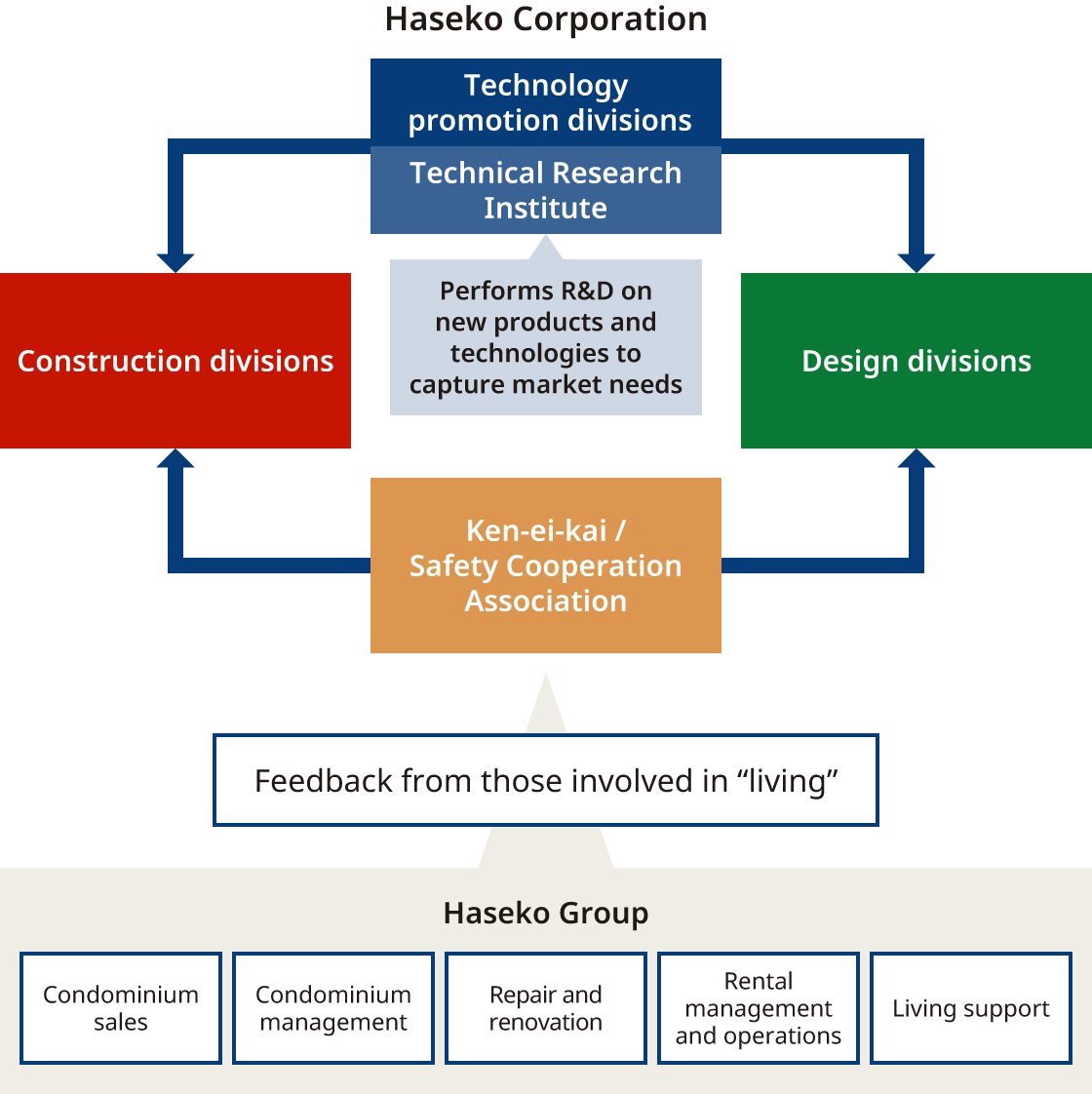
Technical Research Institute
The Haseko Corporation Technical Research Institute is committed to creating housing where people can live safely and comfortably over the long term. Toward this goal, the Institute actively engages in a wide range of performance testing and research and development related to multi-unit residential buildings, striving to meet evolving customer and societal needs, including building longevity, enhanced seismic resistance, and environmental challenges such as CO₂ reduction.
For more details, see the website below.
Initiatives
Intellectual property
Recognizing technological capabilities that support business activities with a core focus on condominium construction ensure our business superiority and lead to increased corporate value, the Haseko Group views intellectual property as a crucial management resource.
For the technology developed within the Haseko Group, technologies at the conceptual phase, and other such technologies, we file for intellectual property rights, manage and maintain such rights, verify potential infringements with third-party patents, and provide support for various contractual agreements to ensure proper management. At the same time, we also collaborate on technology development projects to facilitate the creation of new technologies.
And through in-house education, we increase intellectual property literacy while working to ensure appropriate management of intellectual property and its strategic utilization across the Haseko Group.
Intellectual properties
Units: No.
| Item | Registered | Patent pending |
|---|---|---|
| Patent | 240 | 173 |
| Design | 84 | 17 |
| Utility models | 3 | 0 |
| Total | 327 | 190 |
- As of November 30, 2025
Examples of technological development
Initiatives at Sustaina Branche Hongyotoku
Completed in September 2023, Sustaina Branche Hongyotoku is Japan’s first renovation project that achieves virtually zero CO2 emissions during the building operation. This condominium introduces various state-of-the-art technologies of the Haseko Group, including energy-saving technologies that contribute to realizing a decarbonized society, technologies for extending the life of buildings, and wellness housing technologies while also promoting future-minded housing development that makes use of IoT devices and AI technology. Furthermore, this project’s initiatives have been positively received, and it won the Excellence Award at the 23rd Environmental and Equipment Design Award and the 2025 Demand Side Management Award in addition to the Minister of the Environment Award for Climate Action 2024.
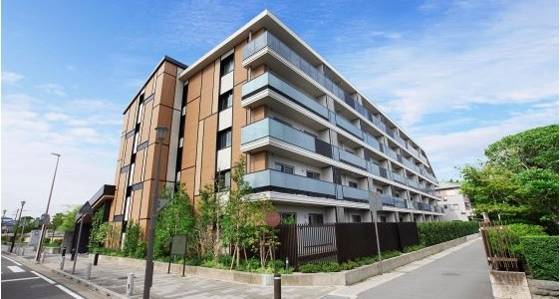
For more details, see the website below.
Environment-related technologies
For more details, see the website below.
- Adoption of “H-BA Concrete,” an environment-conscious concrete
- Increasing wooden structures and use of wood in housing complexes
Technological developments relating to buildings and equipment
We believe that a sense of ease and comfort that people can feel can be created through daily, repeated experimentation and testing.
The Haseko Technical Research Institute recreates actual condominiums as experimental housing units used for research and development in order to ensure the research is carried out in an actual living environment.
We continually refine our housing technology in an environment that is identical to actual condominiums. We test how sound is transmitted within units, how piping deteriorates, and how solar power or other forms of natural energy can be utilized, along with other ideas that can be used in future renovations, to name a few.
Initiatives for internal and external features to improve housing performance
- Development of internal features that enhance variability
- Development of external features that account for durability and updateability
- Development of sound insulation, heat insulation, ventilation and other technologies to improve the quality of living
- Development of products that enhance convenience and comfort
- Development of construction methods for renewing and repairing piping and utility lines
- Initiatives for adopting natural energy
- Development of technology for renovating internal and external features
New 2V-SPEC method for drainage riser renovation
For more details, see the website below.
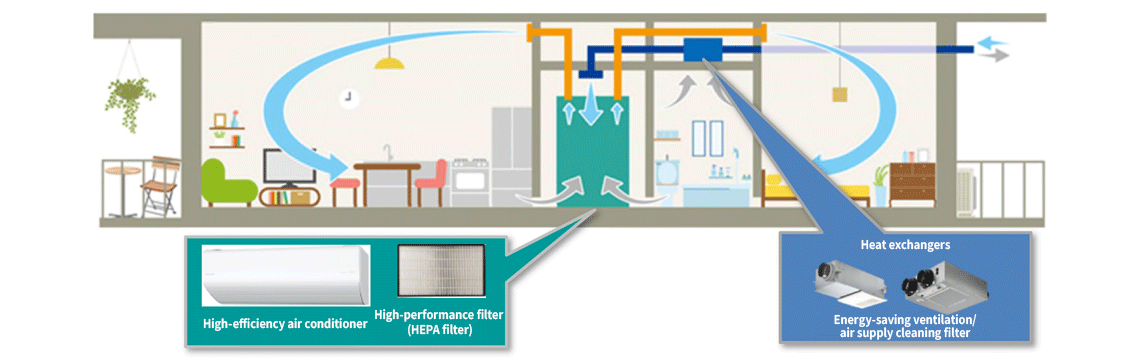
Building-wide air conditioning heat exchange system for residential condominium units
Haseko Corporation, Prime Life Technologies, and Panasonic Construction Engineering have jointly developed the withair® CUBE building-wide air conditioning heat exchange system for residential condominium units.
Air conditioning equipment such as air conditioners, which have been installed in each unit, are now centralized in a single location. By centrally managing one high-efficiency room air conditioner, it is possible to maintain a largely uniform temperature in each unit, and the system is expected to be effective as a heatstroke countermeasure. The system is also equipped with an advanced air cleaning function, which prevents pollen and dust from entering units and cleans the air during circulation while air is supplied. We will actively propose the adoption of this system so as to realize a comfortable environment in residential units.
System features: Comfortable heating/air cleaning function/humidifier function/comfortable sleeping mode/energy-saving
Building a living space and smart home system based on knowledge from the field of sleep medicine
Together with the NTT East group and Brain Sleep, we are testing a home for good sleep approach to improving residents’ day-to-day performance using sleep quality.
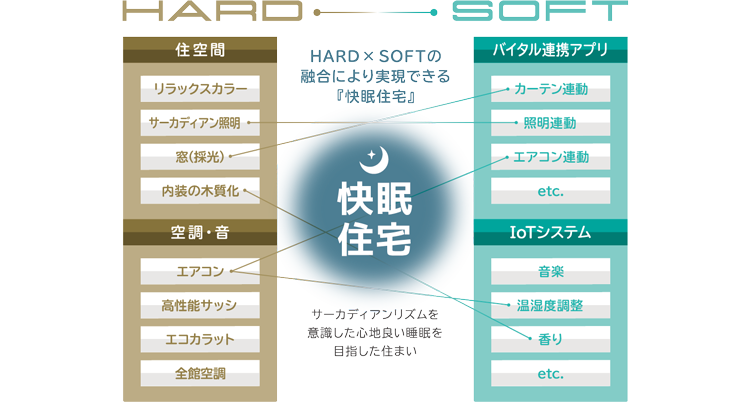
Experimental units in Sustaina Branche Hongyotoku (a property with 36 units) have been outfitted as living spaces featuring optimal temperature and humidity settings, interior walls that have been converted to wood, and other characteristics intended to improve sleep quality based on the latest sleep medicine knowledge. We have synthesized hard and soft parameters to create an environment that improves sleep quality by developing a smart home system that uses a sleep measurement API provided by the NTT East group. In addition, we verify the effectiveness of these features by gathering residents’ sensing data and periodic surveys.
Through this experiment, we aim to provide each of our residents with optimal living spaces from the perspective of sleep and to improve their well-being.
Key aspects of the home for good sleep experiment
- Optimization of circadian rhythm*1 using sleep tech*2: lighting in each residential unit is adjusted using lighting controls, and the amount of sunlight entering the unit is adjusted using curtain and blind controls.
- Building an environment with comfortable temperature, humidity, and air: Temperature and humidity are adjusted using construction methods, insulation, etc. Air conditioning is managed using a building-wide air conditioning system.
- Relaxation effects using color and sound: Relaxation effects are incorporated by using colors conducive to sleep on the walls and playing music conducive to sleeping/waking up.
- Relaxation effects using wood: Relaxation effects are provided by touching wooden crosses and inhaling the fragrance of wood.
- The body’s internal rhythm over an approximately 24-hour cycle.
- Machines, systems, and services that scientifically enhance or improve sleep by monitoring and analyzing sleep conditions using IoT machines and AI technology.
Trends in R&D expenses
(Billions of yen)
| Category | FY2021 | FY2022 | FY2023 | FY2024 |
|---|---|---|---|---|
| R&D expenses | 3.92 | 3.31 | 3.82 | 4.20 |
Related Information
Haseko Group's Sustainability
Related Data / Integrated Report
Special Features
- Human Capital / Human Resource Development
- Diversity & Inclusion / Labor Environment
- Occupational Safety and Health / Health and Productivity Management
- Enhancing Safety and Quality in Buildings and Services
- New Value Creation
- Community
- Research and Technology Development
- Social Contribution Activities