
SEARCH
MENU
Resource Circularity / Pollution Prevention
- Basic Approach & Policy
- Initiative Targets
- Resource and Waste Initiatives
- Pollution Prevention Initiatives
- Water Resource Initiatives
Basic Approach & Policy
We use resources carefully in every process of our business activities and aim to recycle them as much as possible.
In condominium development projects, we will also give due consideration to environmental pollution, noise, and vibration, while actively proposing initiatives such as the creation of green spaces.
Haseko Group’s Environmental Policy (Excerpt)
- Realizing cyclical resource use through effective use of resources and further promotion of waste reduction
- Conserving biodiversity through pollution prevention and nature and ecosystem-conscious efforts
Initiative Targets
In order to bring about a recycling-based society, we strive to reduce construction waste by implementing sorting and recycling of construction waste, reducing the use of packaging, adopting methods to reduce the volume of construction waste discharged, and other efforts. In addition, we participate in the Construction By-product Subcommittee of the Japan Federation of Construction Contractors and cooperate with other companies on initiatives to reduce waste and use resources efficiently.
We will also comply with environmental regulations and ensure thorough pollution prevention.
For results of resource circularity and pollution prevention, please refer to the ESG data.
Resource and Waste Initiatives
Volume of construction waste generated and recycling status
Volumes of construction waste generated and recycled in FY2024 are as set out below.
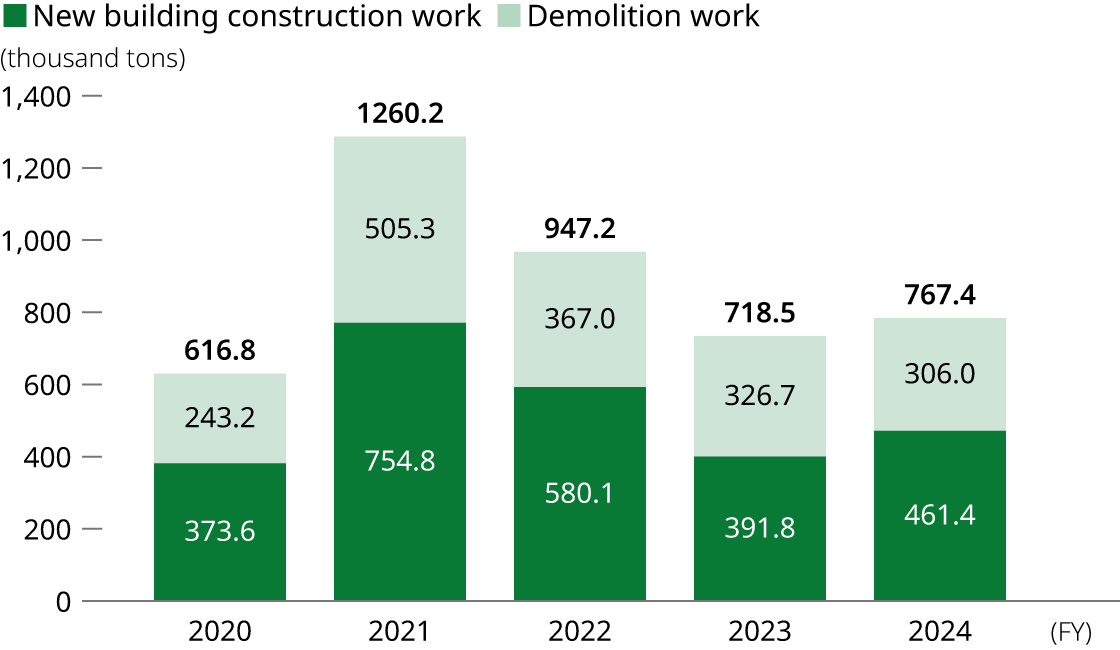
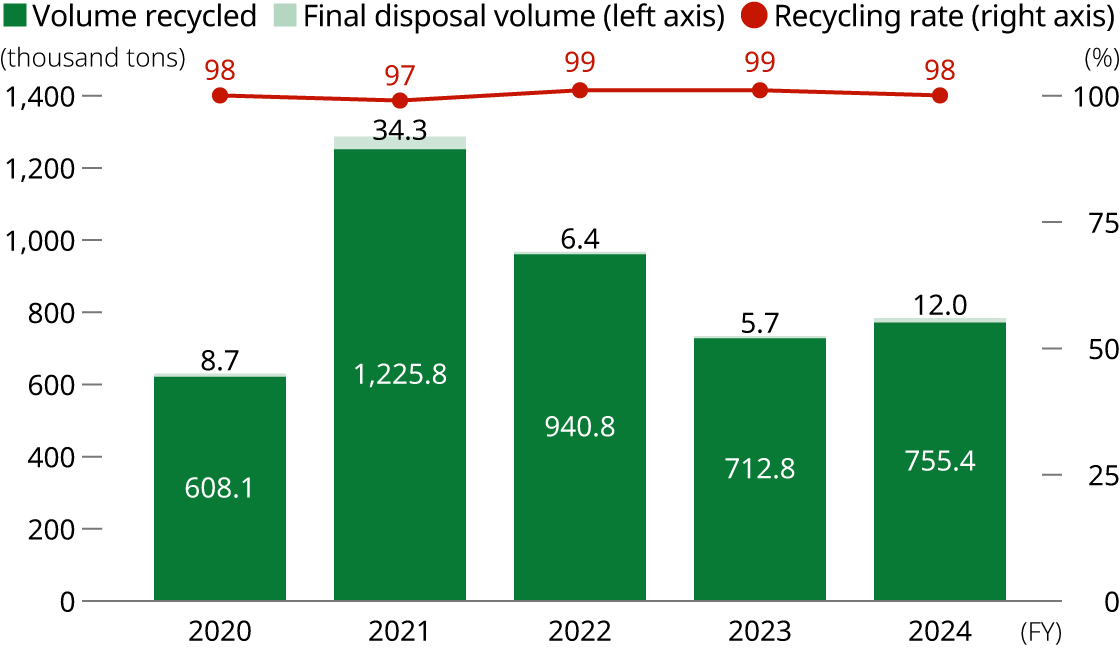
For details, please refer to the ESG data.
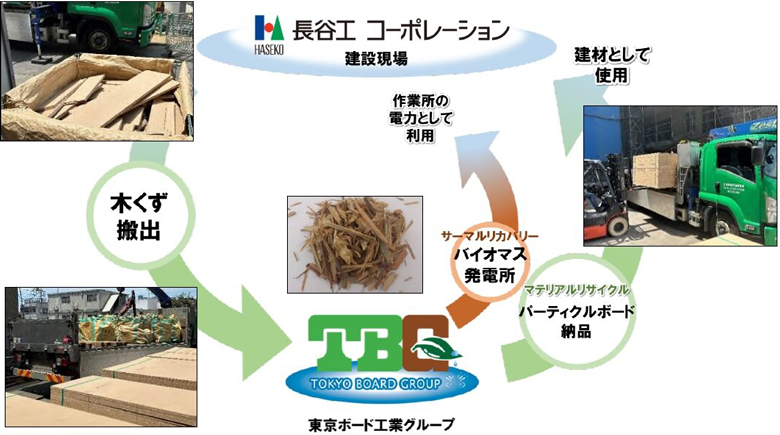
Wooden waste resource recycling initiative
Working with Tokyo Board Industries, a company engaged in the interim processing of wood waste, HASEKO Corporation is undertaking a wooden waste resource recycling initiative under which we simultaneously collect wooden waste generated at construction sites in the Tokyo Metropolitan Area while delivering particle board products (panel-type building materials). In addition to recycling the collected wooden waste into particle boards through a material recycling process, wooden waste that cannot be recycled is used as electric power for construction sites through thermal recovery at biomass power stations. These actions mean we achieve a 100% recycling rate for wooden waste.
Manufacturer recycling using the Wide-Area Certification System
On Haseko Corporation construction sites, we utilize the Wide-Area Certification System under which recovery and recycling is performed by manufacturers in order to promote the reuse of waste. The Wide-Area Certification System enables the proper reuse of waste collected over a wide area by businesses that meet certain criteria, and enables the efficient recycling of waste from the construction sites at which it is generated.
Taking advantage of this system, we recycle the following materials on the basis of wide-area certified processing.
- Plasterboard
- Glass wool
- Sealant containers
- Autoclaved lightweight concrete (ALC)
- Used uniforms, helmets, safety boots, etc.
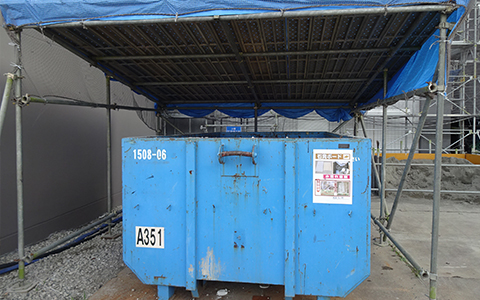
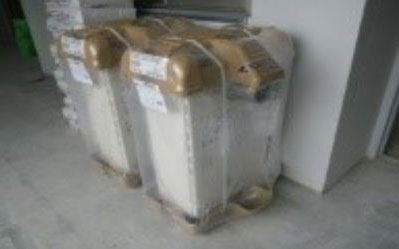
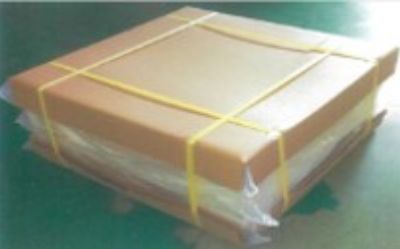
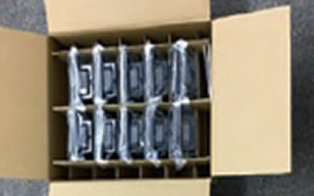
Reduction of cardboard packaging materials by minimizing packaging
In order to reduce cardboard packaging materials at construction sites, we are working to minimize packaging for the transportation of materials and equipment related to facilities.
Execution division's educational initiatives
Education for new employees
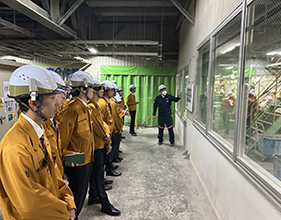
In the FY2024 training program for new recruits with an engineering background offered before assigning them to duties, we carried out a training session for sorting industrial waste at a construction site and a tour of an industrial waste intermediate processing facility. In the training program, new employees learned about the importance of sorting waste at the worksite through the tour of waste generation status and treatment process.
Education of skilled workers at construction sites
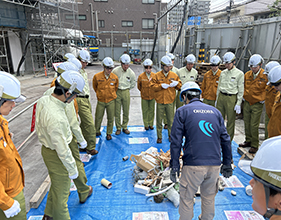
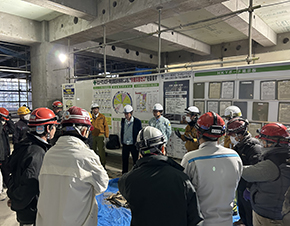
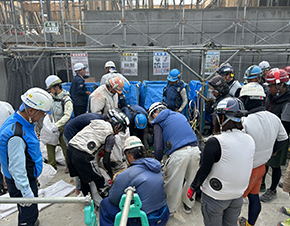
To promote the sorting and recycling of waste generated at construction sites, we have designated industrial waste disposal companies conduct a patrol to check the state of sorting at construction sites. Based on patrol results, we offer appropriate guidance on sorting for each site.
Furthermore, we provide training on sorting waste as needed to workers at construction sites, striving to improve recognition of industrial waste categories and awareness of sorting practices across all construction sites to enhance recognition and awareness on sorting items of industrial waste for a whole construction site. And they have conducted environmental patrols to check on the status of environmental related activities at each construction site and offered guidance as appropriate.
Initiatives concerning wood use in buildings
We have concluded an agreement on the promotion of wooden structures and use of wood in housing with the Ministry of Agriculture, Forestry and Fisheries
On October 31, 2025, Haseko Corporation concluded an agreement on the promotion of wooden structures and use of wood in housing with the Ministry of Agriculture, Forestry and Fisheries. By linking to and cooperating with the Ministry of Agriculture, Forestry and Fisheries, we will work to promote the initiatives set out below on the basis of Haseko Corporation’s Concept for the Promotion of Wood in Buildings, and aim to bring this concept to fruition.
Concept for the Promotion of Wood in Buildings
Through the use of wood in the construction of housing of various scales, from condominiums to detached houses, and through the procurement of wood that takes environmental and other such considerations into account, this initiative will contribute to things including the achievement of carbon neutrality by 2050, the establishment of a circular forest utilization system, and the realization of residents’ well-being.
Details of initiatives to bring this concept to fruition
- Promotion and proactive expansion of construction of condominiums with hybrid structures of wood and reinforced concrete and wooden communal buildings in condominiums in our own business
- Development of elemental technologies for wooden construction and use of wooden materials, and promotion of the use of wood through the adoption of such technologies in housing on a range of scales
- Proactive action to reduce CO2 emissions across the entire lifecycle of housing
- Promotion of construction of circular forest utilization systems for tree planting, forest management, forest thinning, sawing and processing, construction, management, refurbishment, demolition, and reuse
- Proactive PR activities through means including press releases including examples of construction of condominiums and other buildings using wood and wooden materials, and the research and development of technologies relating to the use of wood
Manufacture of HS wood (Haseko sustainable wood), a new wooden building material made from domestically produced cedar
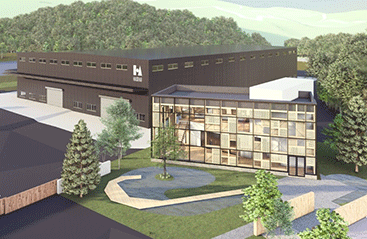
Haseko Corporation has commenced work on the construction of a new factory with the purpose of manufacturing HS wood (Haseko sustainable wood) - a new wooden building material that uses domestically-produced cedar wood to achieve stable quality. Work on this factory will be complete in February 2027, and it is scheduled to start full manufacturing operations in April 2028 once processes such as the building of production lines for manufacturing equipment are complete.
The manufacture and use of HS wood can be expected not only to ensure traceability for wooden materials used in construction and reduce CO2 emissions from transportation and across the supply chain as a whole, but the fact that it uses domestically-produced wood means that a carbon storage effect can be obtained. Going forward, we intend to use it in condominiums that we construct, with a focus on the Kansai and Tokai regions.
Features of HS wood
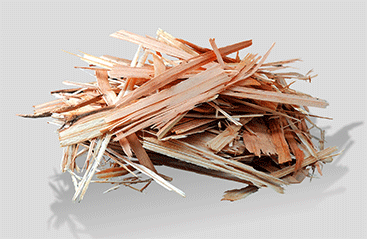
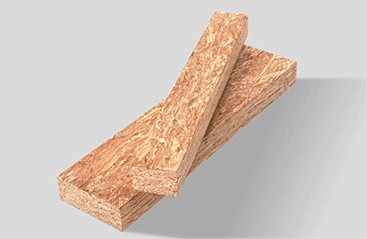
- An engineered wood product with a structure achieved through unidirectional alignment and layering of strands cut from Japanese cedar logs, it provides stable quality unaffected by wood defects such as knots
- Because it uses strands as its base material, it can make use of small-diameter logs and crooked wood that are difficult to use for wooden materials, plywood, or veneer for laminated veneer lumber (LVL), enabling the use of most parts of the wood except the bark, thereby minimizing waste*.
- Joint research with the Institute of Wood Technology, Akita Prefectural University, and The University of Kitakyushu. Patent pending for product composition
Reducing the use of wooden formworks
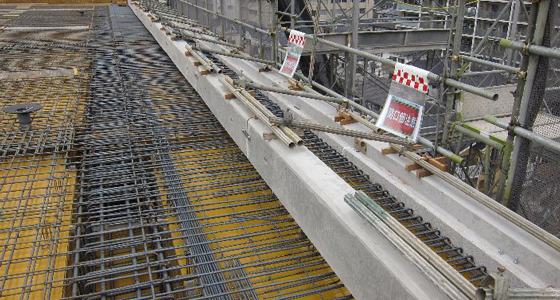
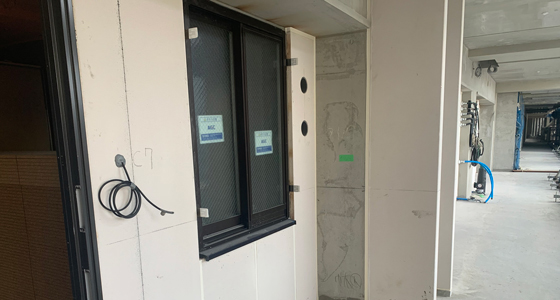
Plywood for concrete formwork is mainly made of materials sourced from rainforests. At Haseko Corporation, we are working to reduce the use of wooden formworks by using industrial products or alternative formworks. For example, we use precast concrete (PCa) units for handrails and edges of corridors and balconies, decorative columns, exterior stairs, floor slabs, and rooftop parapets, and employ the ALC method for non-load-bearing walls. In addition, we use steel formworks and plastic formworks where possible. When wooden formworks are used, we also promote the use of domestically sourced timber.
Green procurement
Initiatives to select materials with smaller environmental footprint is called green procurement. We periodically review the list of green procurement materials based on actual performance and social trends.
For results of green procurement, please refer to the ESG data.
Pollution Prevention Initiatives
Handling of hazardous substances
The Haseko Group strictly undertakes proper management and disposal of hazardous substances in accordance with relevant laws and regulations.
For results of hazardous substances and atmospheric pollutants, please refer to the ESG data.
Response to soil contamination (brownfield redevelopment)
In the acquisition of land, the Haseko Group investigates the usage history and conducts soil surveys by third-party specialists if there is any doubt about soil contamination.
When soil contamination is confirmed, based on the survey results, we consider costs, scheduling, and procedures, which include the cancellation of designations of areas that require measures and of designations of areas that require notification for any intended change in characteristics in accordance with the Soil Contamination Countermeasures Act and other relevant laws and regulations. We then choose the most appropriate method for dealing with the contamination backed by our abundant experience. We take measures to prevent the spread of contamination, including excavation and removal or containment of pollutants.
Some of the contaminated soil which is excavated and removed is transported to cement works and other facilities conforming to relevant laws and regulations, and recycled as raw materials.
General waste soil resulting from excavation work at construction sites is disposed appropriately in accordance with relevant laws and regulations.
Construction site effluent quality management
For each construction site, Haseko Corporation establishes effluent plans after confirming relevant laws and regulations for the area.
It thoroughly manages the quality of construction site effluent using the Company’s own environmental law and regulation check sheet.
Management status is confirmed via an environmental patrol by a specialist division, and no issues have arisen to date.
Water Resource Initiatives
Water is an essential resource for people's lives. In order to carefully use limited water resources, the Company monitors its water usage and prevents pollution, striving to reduce water usage and conserve water resources.
For results of water usage, please refer to the ESG Data.
Adoption of water-saving equipment in Haseko condominiums
Haseko Corporation and Haseko Property Management Holdings have developed the Smart Water Tank, which collects and stores rainwater from condominium roofs. The stored rainwater can be used efficiently for watering plants, enabling preservation of water resources. Additionally, when combined with the WELLUP proprietary emergency water purification system, drinking water is supplied to residents in emergency situations. Along with increased adoption in the Group’s for-sale condominiums, the technology is gradually being installed in condominiums with 200 or more units designed and constructed by Haseko Corporation.
Furthermore, as part of our green procurement initiatives for construction materials, we are promoting installation of water-saving toilet bowls and showerheads.
Business activities in water-stressed areas
Japan is the key location for Haseko Corporation’s business activities. In the World Resources Institute’s Aqueduct 4.0 report, Japan’s water stress is rated low-medium, indicating it is an area of relatively little water stress. As of the end of March 2025, our business activities overseas are limited, but if in the future we expand our business into regions where water stress is a concern, we will engage in proper management.
Related Information
Haseko Group's Sustainability
Related Data / Integrated Report
Special Features
- Human Capital / Human Resource Development
- Diversity & Inclusion / Labor Environment
- Occupational Safety and Health / Health and Productivity Management
- Enhancing Safety and Quality in Buildings and Services
- New Value Creation
- Community
- Research and Technology Development
- Social Contribution Activities