
SEARCH
MENU
Our Approach to Sustainability
- Sustainability Framework
- Our Four Main Themes (Fields of value creation)
- Materiality
- Promotion of Sustainability Action Plan
- Sustainability Organizational Framework
- Education and Training
Sustainability Framework
We at the Haseko Group adopt a long-term perspective as we aim to address the social issues surrounding our daily lives through business operations.
As a leading company in “housing” and “living”, we will promote sustainability based on our Sustainability Vision to fulfill our corporate philosophy and contribute to a sustainable society.
Haseko Group's Corporate Philosophy
To contribute to society by creating an optimal environment
for cities and people
Sustainability Vision

Social issues surrounding our daily lives
- Climate change
- Ecosystem conservation
- Safety and security
- Disasters and disaster prevention
- Regional revitalization
- Response to demographic changes and aging society
- Diversity promotion
- Technology
- Health, medical care, and nursing care
- Vocational education and creation of employment opportunities
- Childcare and parenting support
- Sustainable consumption
- Resource circularity
Sustainability Policy
Based on the following policy, we, in the Haseko Group, aim to enhance corporate value sustainably to achieve the Sustainability Vision.
- Through a broad range of businesses related to housing and daily life, we will contribute to the realization of a sustainable society.
- In collaboration with our stakeholders, we will take action to integrate social and environmental concerns into our business processes.
- Utilizing the collective capabilities of our Group, we will strengthen our management ability in order to create new value for society and meet the expectations of our customers and other stakeholders.
- In all our business activities, we will comply with the law and act on the basis of high ethical standards.
- We will continue to improve our initiatives, proactively disclose information, and aim to raise transparency throughout the organization.
the collective capabilities of the Haseko Group,
and they serve as the primary driving sustainability initiatives.
- People, organization, and teamwork
- Human resources full of spirit to take on challenges and vitality to take action will create new value to meet social expectations, together with various departments, Group companies, clients and members of local communities.
- Consumer perspective
- We have created the history of condominiums in Japan with consumers. On the front line of our businesses of housing and daily life, we will constantly uncover consumers’ needs and materialize products and services leveraging the collective capabilities of the Haseko Group.
- Technology and know-how for life and living space
- Based on a wide range of technologies and know-how related to life and living space, we are aggressively engaging in technological development and making business proposals that further accelerate solutions of social and environmental issues.
Our Four Main Themes (Fields of value creation)
Toward the realization of our Sustainability Vision, the Haseko Group has defined the four main themes of creating attractive living spaces, building a company worth working at, protecting the precious environment, and nurturing a culture of trust.
These themes indicate the fields in which the Haseko Group will create value for society through its business activities. They clearly set out the areas in which we will leverage our value in terms of the social issues surrounding our daily lives, and form an axis around which we can promote both our business and sustainability in a unified fashion.
-
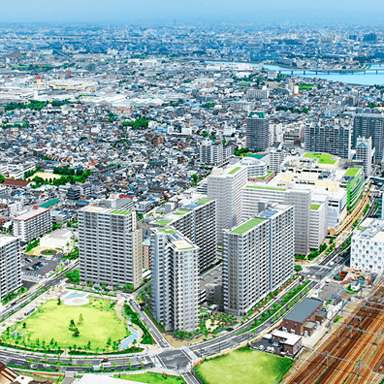
Creating attractive living spaces

We will create living spaces where people can feel safe, grow, and actively pursue diverse lifestyles. While promoting business that enhances the quality of child nursing, education, care, and welfare, we will aim to make safe, secure, and environmentally considerate living the new standard.
-
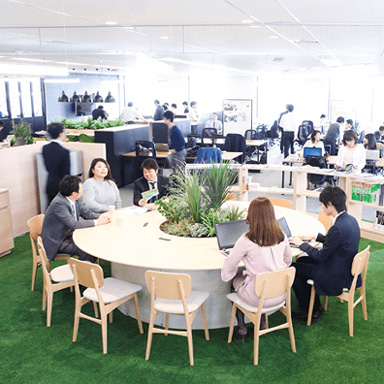
Building a company worth working at

We will nurture a workplace where a diversity of employees can flourish, and where safety and productivity are high. Employees with advanced technological skill and know-how in the field of life and living spaces will work in passionate teamwork, and in collaboration with our business partners, to build attractive townhoods today and in the future.
-
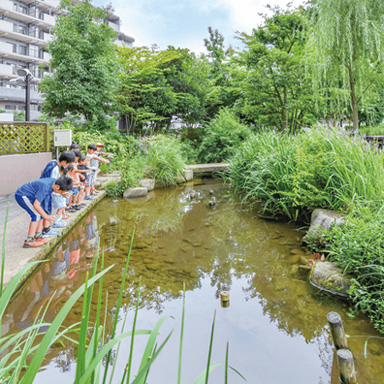
Protecting the precious environment

We will promote environmental measures throughout the process of providing living spaces and services related to daily life. We are considerate about our impact on the ecosystem, and will pursue further improvements of resource and energy efficiency working with business partners to realize construction sites and workspaces that help protect the natural environment.
-
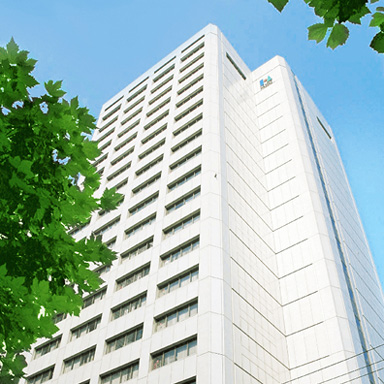
Nurturing a culture of trust

In order to remain a corporate group co-creating value with stakeholders based on strong trust-based relations, we will implement the required organizational measures rigorously. We will strengthen management that harnesses our collective capabilities as a group, and while staying alert to new social and environmental issues, we will aim to constantly expand our ability to contribute to society through our business.
Materiality
Recognizing changes and issues in the social environment concerning housing and living as important issues directly related to our business, the Haseko Group has identified priority issues as its materiality from the perspective of business and social axes and aims to both find solutions for issues facing society and achieve sustained growth.
After first identifying these material issues in 2018, we subsequently revised their details in April 2020, in May 2023, and again in July 2026.
Haseko Group’s Materiality
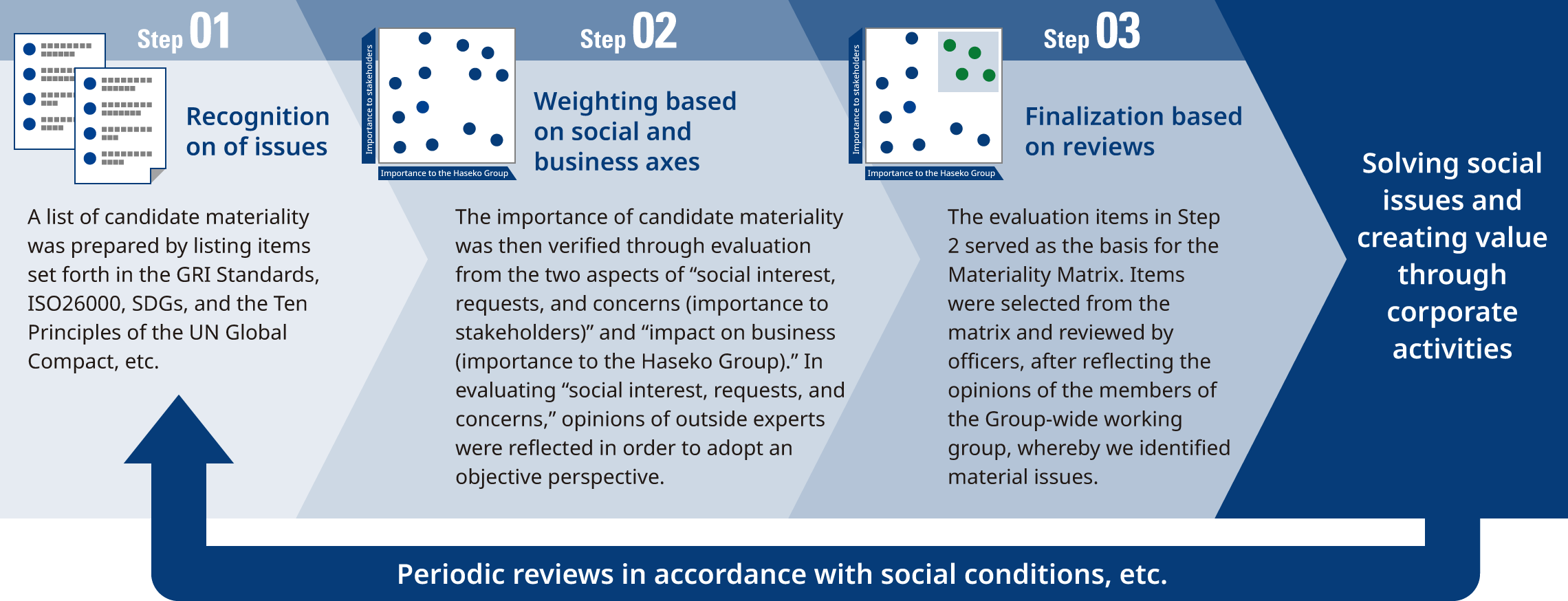
Identification Process
The HASEKO Evolution Plan (Medium-Term Business Plan) was formulated in April 2025, and we re-identified our material issues in July 2026 with the goal of increasing their connection to changes in the social environment and business issues. Having given systematic consideration to the issues that are important for the Haseko Group and incorporated international guidelines, external appraisals, and stakeholder perspectives while reflecting upon our previous materialities, we have completely rethought our materialities so that they incorporate the idea of creating opportunities to a greater extent.
By tackling these materialities, we will ensure our business activities contribute to finding solutions for issues faced by society and to further value creation.
Step 01: Identification of candidate material issues
In reflection upon previous materialities and the identification process, we gave structured consideration to consistency with the current business environment and the Medium-Term Business Plan and to perception of issues.
We then created a broad-ranging list of important issues based on the following perspectives.
- International initiatives (WEF, WBCSD)
- International standards and guidelines (SASB, ESRS, etc.), business sector industrial groups (Japan Federation of Construction Contractors, etc.)
- Points evaluated by ESG evaluation agencies (FTSE, MSCI, Sustainalytics)
- Industrial trends
In light of these, we gave structured consideration to the relevance between the business of the Haseko Group and issues faced by society and environmental issues.

Step 02: Evaluation of candidate material issues
For the identified candidates, we clearly documented the business risks and opportunities and the impact on society, and evaluated each issue.
We gathered issues that take into account medium- to long-term management strategy and business environment through interviews with top management, input sessions with the Sustainability Committee, and questionnaires for the Sustainability Committee (31 members at group management level), and incorporated them in the evaluation of candidate material issues.
Step 03: Mapping of candidate material issues
Based on the evaluation results, we created a materiality matrix by organizing the relative importance of each issue within the Haseko Group along the two axes of impact on society and impact on business. With regard to social impact, we incorporated the opinions of external experts in order to ensure objectivity.
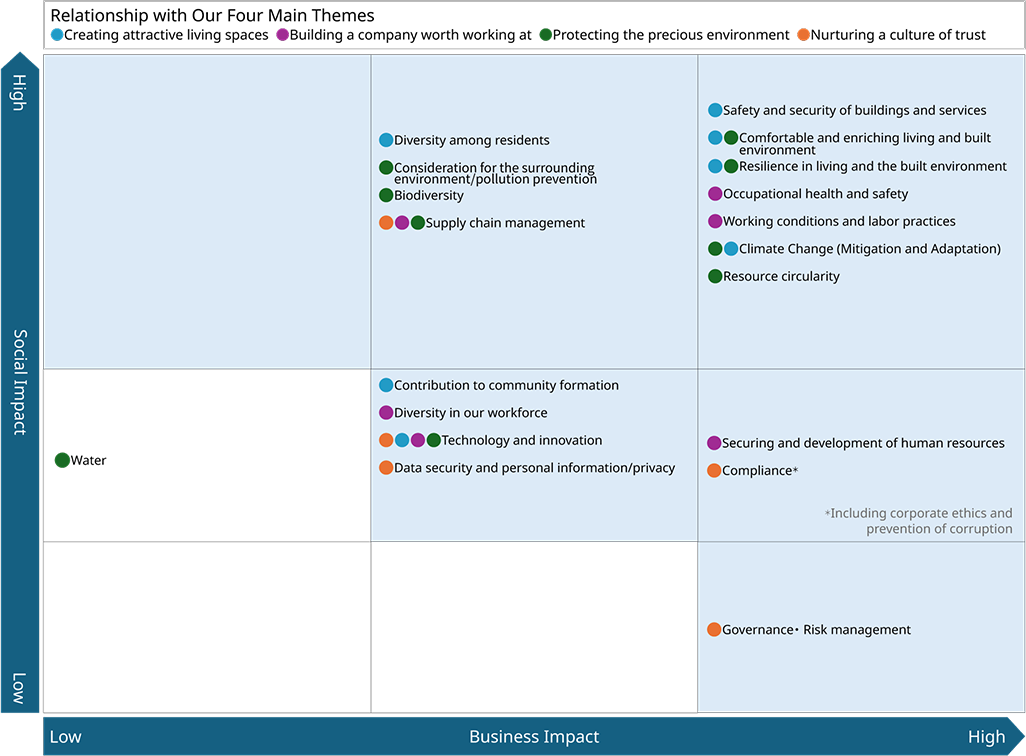
Validity check, identification
We broke down and integrated the mapped candidates, and formulated Six Material Issues and 20 Key Initiatives to be addressed.
After passing a screening and approval process by the Sustainability Committee, which is headed by the president of Haseko Corporation, to confirm their validity, and following a report to the Board of Directors, we identified these material issues as the Haseko Group's materiality.
Promotion of Sustainability Action Plan
As a specific initiative for implementing sustainability, we have established Haseko Group Sustainability Action Plan and are making progress with its implementation. Sustainability Action Plan is based on Our Four Main Themes, and consists of initiative items to move toward the “Vision for 2037 (100th anniversary)” and key performance indicators (KPIs) to measure how much progress has been made. The Action Plan covers the business activities of the entire Haseko Group and is reviewed and improved each fiscal year. (As of May 2026)
A report on the targets and results for FY2025:
Position of Sustainability in the Medium-Term Business Plan "HASEKO Evolution Plan"
The Haseko Group has formulated a Medium-Term Business Plan (HASEKO Evolution Plan) (for the period from the fiscal year ending March 2026 to the fiscal year ending March 2031), which sets the basic policy of “As a leading company in ‘housing’ and ‘living,’ to achieve sustainable growth and enhance corporate value.”
HASEKO Evolution Plan sets forth the deepening of sustainability initiatives as a measure to strengthen our management foundation, and we aim to bring sophistication to these initiatives by aligning them closely with our business strategy.
Main Non-Financial KPIs
We have set KPIs for Responding to climate change, Human Capital, Respect for human rights, and Supply chain Management and will continue to make steady progress in meeting them. KPIs will be continually reviewed based on the business environment.
| Material issues | Initiatives and KPIs | Target figures |
|---|---|---|
| Climate change response | Reduce greenhouse gas (CO2) emissions (base year FY2020) · Scope 1+Scope 2 · Scope 2 (t-CO2) · Scope 3 |
FY2030 (42%) FY2026 0 FY2030 (13%) |
| Introduce renewable energy (including group companies and offices) |
FY2026 100% | |
| Adopt H-BA Concrete | FY2030 50% or more | |
| Expand ZEH-M supply · Properties developed by the Group · Properties constructed by the Group |
Each year 100% FY2030 100% |
|
| Human Capital | % of female managers | FY2030 12% or more |
| % of DX promotion personnel | FY2030 20% or more | |
| % of operation with 8 days off every 4 weeks | FY2027 100% | |
| % of eligibles for specific health guidance | FY2030 15% or less | |
| Respect for human rights | Implementation of human rights due diligence | Implement every FY |
| Supply Chain Management | % of response for sustainable procurement questionnaire (construction-related organizations of partner companies) | Each FY 100% |
| % of engagement with foreign workers Implementation rate (based on the number of cooperating companies) | Each FY 100% |
Results in terms of KPIs available on the ESG data page.
Sustainability Management Structure
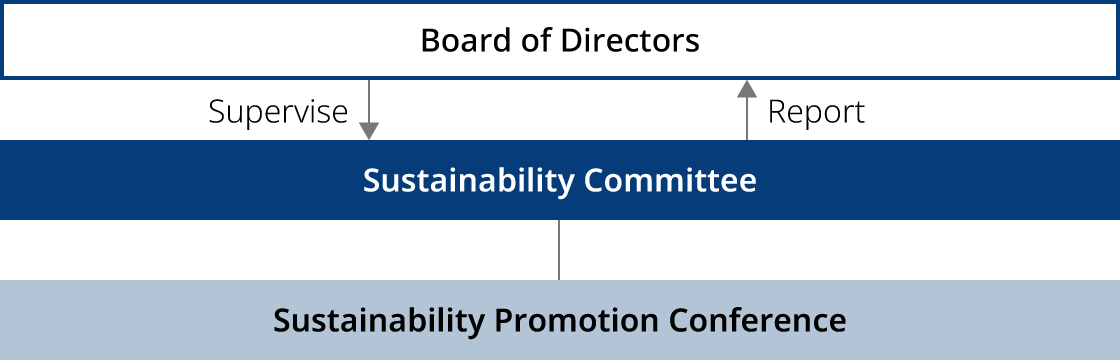
The Haseko Group is promoting sustainability organizationally through the operation of the management system shown below. As a subordinate organization to the Board of Directors, we have established a "Sustainability Committee" chaired by the president of Haseko Corporation, which examines and decides on sustainability policies and activity plans, as well as monitors and reviews the status of activities. Matters discussed and reported at the Sustainability Committee are reported to and supervised by the Board of Directors, and important matters are submitted to the Board for deliberation and decision.
Additionally, as a subordinate body under the committee, we also have the “Sustainability Promotion Conference” to engage in promoting and instilling sustainability across the Group.
We will continue to actively advance various initiatives towards the realization of sustainability.
| Body | Role | Composition | Frequency of meetings | Secretariat |
|---|---|---|---|---|
| Sustainability Committee | Deliberates and decides matters on sustainability management at the management level | [Chairperson] President of Haseko Corporation | Twice a year | Sustainability Promotion Department |
| [Committee members] Officers in charge of Haseko Corporation divisions and Haseko Group company presidents | ||||
| Sustainability Promotion Conference | Deliberates and executes specific measures for sustainability management | [Conference members] Operating officers and managers of Haseko Corporation and Haseko Group companies | Three times a year |
Education and Training
Based on its Sustainability Vision and Sustainability Policy, the Haseko Group is working on education and training about sustainability within the Group in order to ensure that all Group employees understand sustainability and practice it in their daily work.
Main Education and Awareness Measures
- Sustainability e-learning (twice a year)
- Sustainability lectures (as needed)
- Briefings on sustainability initiatives at each site (as needed)
In addition, we will use the intranet to actively introduce cases related to the latest sustainability trends and internal Group initiatives, and continue promoting education and awareness that translate into action by each and every employee.
Related Information
Haseko Group's Sustainability
Related Data / Integrated Report
Special Features
- Human Capital / Human Resource Development
- Diversity & Inclusion / Labor Environment
- Occupational Safety and Health / Health and Productivity Management
- Enhancing Safety and Quality in Buildings and Services
- New Value Creation
- Community
- Research and Technology Development
- Social Contribution Activities